.svg)


.png)
.jpg)
VikingCloud News & Resources
Check out the latest news and resources from VikingCloud.
Explore all Resources
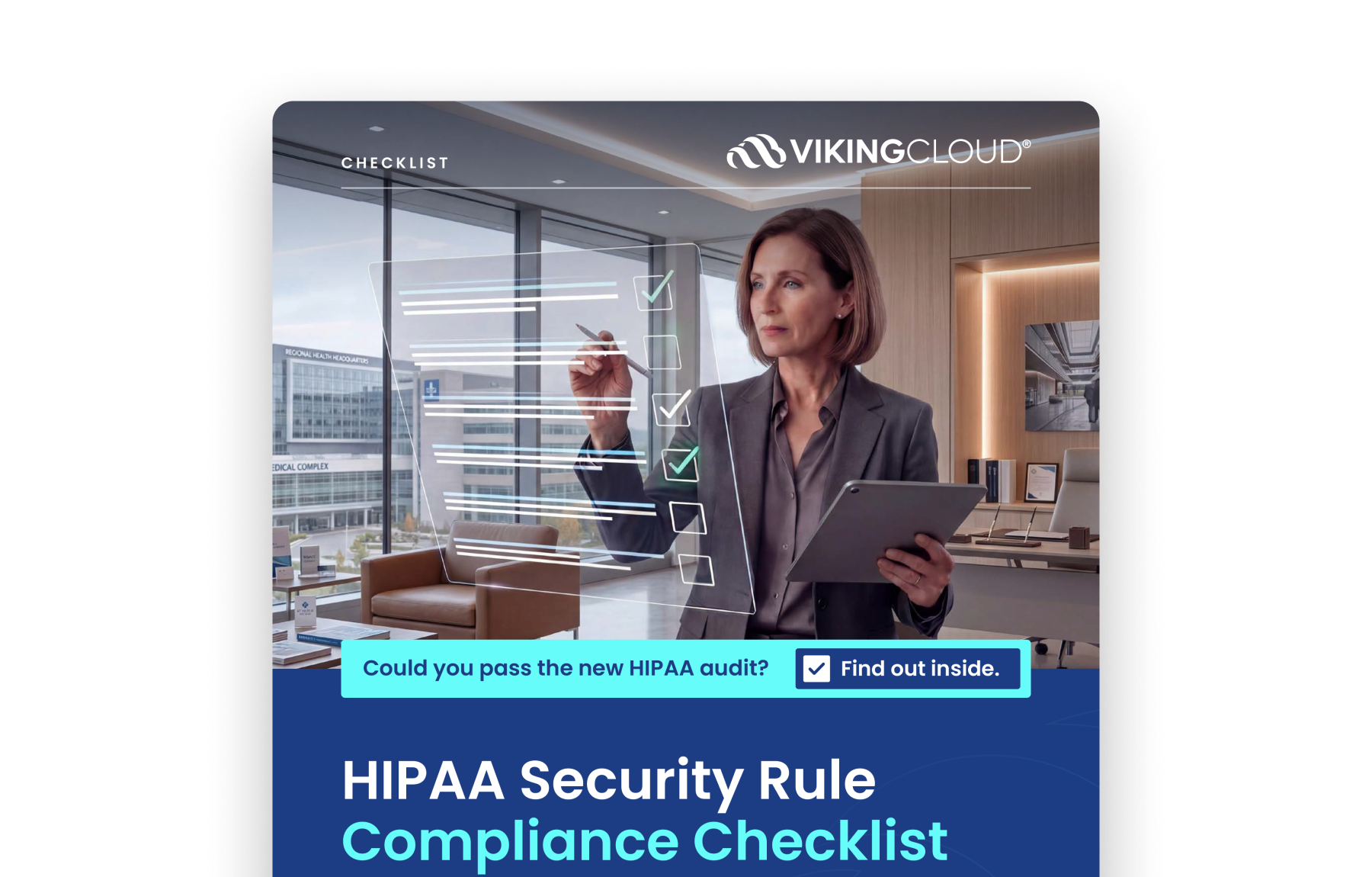
Covered entities come in every shape from urgent care chains, dental and vision groups, imaging and dialysis networks, physician practices, and hospital systems. Business associates handle PHI on their behalf. Select your view below to see how VikingCloud protects your environment and keeps you HIPAA-ready.
When you handle PHI on behalf of a covered entity, HIPAA Security Rule requirements follow the data directly to you. A security gap in your environment can trigger breach notification obligations for every covered entity client whose data was involved. We give business associates the testing, advisory, and platform expertise needed to protect PHI, satisfy Business Associate Agreement obligations, and demonstrate a defensible security posture to clients who are increasingly scrutinizing their partners.
Our security testing helps business associates identify and close vulnerabilities in the systems, integrations, and data pipelines that handle covered entity PHI, so a gap in your environment doesn’t become a breach notification obligation for your clients.

Our patented, purpose-built platform provides real-time insight and oversight of your cybersecurity status across clinical systems, connected devices, and third-party integrations, with predictive analysis so you can address threats before they escalate.
Our cloud-based scanner assesses your internet-facing systems from an attacker’s vantage point, identifying external exposures before they become entry points to covered entity PHI.
Deployed via virtual or hardware appliance inside your environment, our internal scanning inspects network segments and the systems handling covered entity PHI, with authenticated scans that surface risks perimeter-only scanning misses.
VikingCloud monitors networks for malicious activity and policy violations, feeds data to SIEM, and generates HIPAA-ready reports, providing a continuous detection layer between your systems and threat actors.
Centralized firewall configuration, rule setting, and patching to prevent unauthorized network access to systems that handle covered entity PHI.
24x7 monitoring and threat detection. Our security operations team acts as an extension of your staff, watching for threats, correlating events, and responding so your team stays focused on serving your clients.
Network, segmentation, and web application testing by our Cyber Threat Unit, certified ethical hackers who scope engagements to maximize coverage while minimizing disruption to care operations.
VikingCloud collects, analyzes, and correlates security logs across your environment to identify threats and anomalous activity in real time, with outputs that support HIPAA audit requirements.
Endpoint detection and managed detection & response (MDR) for environments that handle PHI. Engineered to catch sophisticated, fileless, and lateral-movement threats that bypass traditional controls, with rapid containment before they spread.
Our compliance and risk services help business associates meet HIPAA Security Rule obligations, satisfy Business Associate Agreement requirements, and demonstrate a defensible security posture to the covered entity clients who increasingly scrutinize their partners.
Our patented, purpose-built platform gives compliance teams real-time visibility, tracks remediation progress, surfaces gaps, and provides the audit-ready documentation HIPAA Security Rule compliance requires.
When a potential PHI breach occurs, our team supports forensic investigation, breach determination under the HIPAA Breach Notification Rule, and required notifications to affected individuals, HHS OCR, and media outlets where applicable.
Ongoing advisory for business associates building or maturing HIPAA compliance programs. Covers policy development, subcontractor and sub-business-associate agreement management, security safeguards, workforce training, and preparation for the compliance assessments client covered entities increasingly require.
For organizations that have a risk assessment but need help closing the gaps. Our advisors work through your control environment, identify deficiencies against Security Rule requirements, and build a prioritized remediation roadmap.
A structured evaluation of your security posture against the HIPAA Security Rule’s implementation specifications. We identify gaps, prioritize risk, and produce the documented risk analysis HHS OCR requires across all facilities and systems in scope.
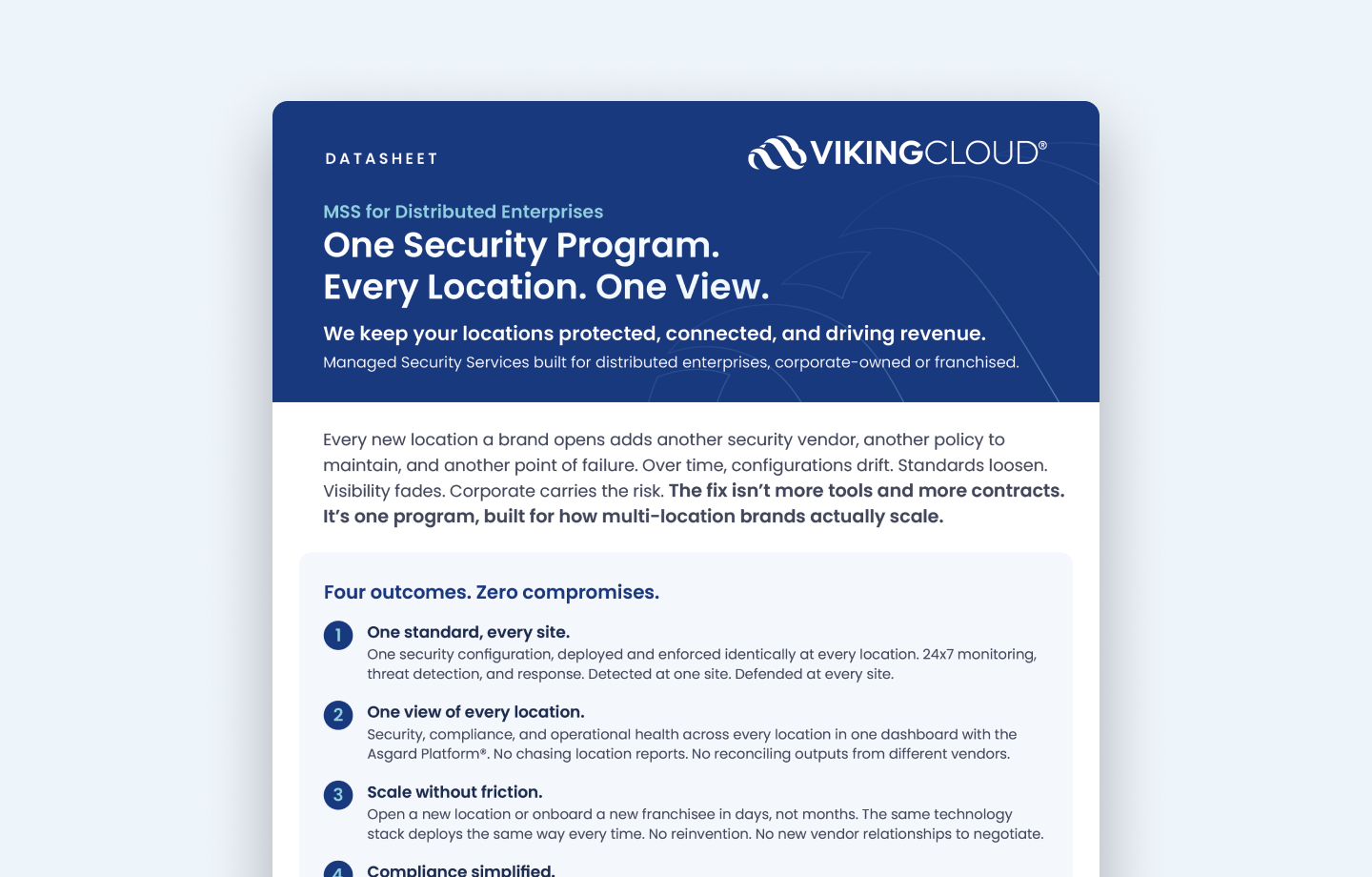
Protecting distributed environments is our specialty, whether that’s one hospital campus or hundreds of clinic, pharmacy, or urgent care locations. We give your team a single, real-time view across clinical systems, point-of-sale infrastructure, connected devices, and third-party integrations, with 24x7 access to our security and compliance professionals so your staff stays focused on patient care.
Our security testing helps covered entities identify and close vulnerabilities in clinical environments, distributed infrastructure, and third-party integrations before attackers can exploit them.
Our patented, purpose-built platform provides real-time insight and oversight of your cybersecurity status across clinical systems, connected devices, and third-party integrations, with predictive analysis so you can address threats before they escalate.
Our cloud-based scanner assesses internet-facing systems like patient portals, web applications, and remote access points from an attacker’s vantage point, identifying external exposures before they become entry points.
Deployed via virtual or hardware appliance inside your environment, our internal scanning inspects network segments, clinical systems, and connected medical devices, with authenticated scans that surface risks perimeter-only scanning misses.
VikingCloud monitors networks for malicious activity and policy violations, feeds data to SIEM, and generates HIPAA-ready reports, providing a continuous detection layer between your systems and threat actors.
Centralized firewall configuration, rule setting, and patching to prevent unauthorized network access, including the clinical/administrative segmentation HIPAA’s technical safeguards require.
24x7 monitoring and threat detection. Our security operations team acts as an extension of your staff, watching for threats, correlating events, and responding so your clinical and IT teams stay focused on patient care.
Network, segmentation, and web application testing by our Cyber Threat Unit, certified ethical hackers who scope engagements to maximize coverage while minimizing disruption to care operations.
VikingCloud collects, analyzes, and correlates security logs across your environment to identify threats and anomalous activity in real time, with outputs that support HIPAA audit requirements.
Endpoint detection and managed detection & response (MDR) for healthcare environments. Engineered to catch sophisticated, fileless, and lateral-movement threats that bypass traditional controls, with rapid containment before they spread.
Our compliance and risk services help covered entities meet HIPAA Security Rule requirements for risk analysis, risk management, and security program documentation, building a defensible posture that holds up to HHS OCR scrutiny.
Our patented, purpose-built platform gives compliance teams real-time visibility, tracks remediation progress, surfaces gaps, and provides the audit-ready documentation HIPAA Security Rule compliance requires.
When a potential PHI breach occurs, our team supports forensic investigation, breach determination under the HIPAA Breach Notification Rule, and required notifications to affected individuals, HHS OCR, and media outlets where applicable.
Ongoing advisory for covered entities building or maturing HIPAA compliance programs. Covers policy development, administrative safeguards, Business Associate Agreement review, workforce training, and HHS OCR audit preparation.
For organizations that have a risk assessment but need help closing the gaps. Our advisors work through your control environment, identify deficiencies against Security Rule requirements, and build a prioritized remediation roadmap.
A structured evaluation of your security posture against the HIPAA Security Rule’s implementation specifications. We identify gaps, prioritize risk, and produce the documented risk analysis HHS OCR requires across all facilities and systems in scope.
VikingCloud’s healthcare cybersecurity and compliance services work alongside your team, from single-site clinics to multi-state healthcare networks, to identify vulnerabilities, strengthen HIPAA Security Rule readiness, and keep every location protected, so you can focus on your patients and customers.

Your trusted cybersecurity defense partner.
most expensive industry for data breaches, 14 consecutive years.
patient records exposed in reported breaches.
average cost of a healthcare data breach.

Protecting patients. Preserving trust.
Cybersecurity & compliance that simply works.
Healthcare manages some of the most sensitive data across an increasingly complex ecosystem. From electronic health record (EHR) platforms and revenue cycle systems to remote patient monitoring and third-party cloud services, every connection creates exposure. The numbers reflect it: healthcare has led every industry in data breach costs for more than a decade.
VikingCloud helps covered entities and business associates identify vulnerabilities, strengthen security posture, and navigate HIPAA Security Rule requirements, all from one expert partner, whether you operate a few sites or hundreds of locations. So your clinical and IT teams can stay focused on patient care while we focus on keeping it protected.
Key cybersecurity threats healthcare organizations can’t ignore:
VikingCloud closes the gaps so you can protect your systems, your patients’ data, and your ability to deliver care.
Covered entities come in every shape from urgent care chains, dental and vision groups, imaging and dialysis networks, physician practices, and hospital systems. Business associates handle PHI on their behalf. Select your view below to see how VikingCloud protects your environment and keeps you HIPAA-ready.
When you handle PHI on behalf of a covered entity, HIPAA Security Rule requirements follow the data directly to you. A security gap in your environment can trigger breach notification obligations for every covered entity client whose data was involved. We give business associates the testing, advisory, and platform expertise needed to protect PHI, satisfy Business Associate Agreement obligations, and demonstrate a defensible security posture to clients who are increasingly scrutinizing their partners.
Our security testing helps business associates identify and close vulnerabilities in the systems, integrations, and data pipelines that handle covered entity PHI, so a gap in your environment doesn’t become a breach notification obligation for your clients.
Our patented, purpose-built platform provides real-time insight and oversight of your cybersecurity status across clinical systems, connected devices, and third-party integrations, with predictive analysis so you can address threats before they escalate.
Our cloud-based scanner assesses your internet-facing systems from an attacker’s vantage point, identifying external exposures before they become entry points to covered entity PHI.
Deployed via virtual or hardware appliance inside your environment, our internal scanning inspects network segments and the systems handling covered entity PHI, with authenticated scans that surface risks perimeter-only scanning misses.
VikingCloud monitors networks for malicious activity and policy violations, feeds data to SIEM, and generates HIPAA-ready reports, providing a continuous detection layer between your systems and threat actors.
Centralized firewall configuration, rule setting, and patching to prevent unauthorized network access to systems that handle covered entity PHI.
24x7 monitoring and threat detection. Our security operations team acts as an extension of your staff, watching for threats, correlating events, and responding so your team stays focused on serving your clients.
Network, segmentation, and web application testing by our Cyber Threat Unit, certified ethical hackers who scope engagements to maximize coverage while minimizing disruption to care operations.
VikingCloud collects, analyzes, and correlates security logs across your environment to identify threats and anomalous activity in real time, with outputs that support HIPAA audit requirements.
Endpoint detection and managed detection & response (MDR) for environments that handle PHI. Engineered to catch sophisticated, fileless, and lateral-movement threats that bypass traditional controls, with rapid containment before they spread.
Our compliance and risk services help business associates meet HIPAA Security Rule obligations, satisfy Business Associate Agreement requirements, and demonstrate a defensible security posture to the covered entity clients who increasingly scrutinize their partners.
Our patented, purpose-built platform gives compliance teams real-time visibility, tracks remediation progress, surfaces gaps, and provides the audit-ready documentation HIPAA Security Rule compliance requires.
When a potential PHI breach occurs, our team supports forensic investigation, breach determination under the HIPAA Breach Notification Rule, and required notifications to affected individuals, HHS OCR, and media outlets where applicable.
Ongoing advisory for business associates building or maturing HIPAA compliance programs. Covers policy development, subcontractor and sub-business-associate agreement management, security safeguards, workforce training, and preparation for the compliance assessments client covered entities increasingly require.
For organizations that have a risk assessment but need help closing the gaps. Our advisors work through your control environment, identify deficiencies against Security Rule requirements, and build a prioritized remediation roadmap.
A structured evaluation of your security posture against the HIPAA Security Rule’s implementation specifications. We identify gaps, prioritize risk, and produce the documented risk analysis HHS OCR requires across all facilities and systems in scope.
Protecting distributed environments is our specialty, whether that’s one hospital campus or hundreds of clinic, pharmacy, or urgent care locations. We give your team a single, real-time view across clinical systems, point-of-sale infrastructure, connected devices, and third-party integrations, with 24x7 access to our security and compliance professionals so your staff stays focused on patient care.
Our security testing helps covered entities identify and close vulnerabilities in clinical environments, distributed infrastructure, and third-party integrations before attackers can exploit them.
Our patented, purpose-built platform provides real-time insight and oversight of your cybersecurity status across clinical systems, connected devices, and third-party integrations, with predictive analysis so you can address threats before they escalate.
Our cloud-based scanner assesses internet-facing systems like patient portals, web applications, and remote access points from an attacker’s vantage point, identifying external exposures before they become entry points.
Deployed via virtual or hardware appliance inside your environment, our internal scanning inspects network segments, clinical systems, and connected medical devices, with authenticated scans that surface risks perimeter-only scanning misses.
VikingCloud monitors networks for malicious activity and policy violations, feeds data to SIEM, and generates HIPAA-ready reports, providing a continuous detection layer between your systems and threat actors.
Centralized firewall configuration, rule setting, and patching to prevent unauthorized network access, including the clinical/administrative segmentation HIPAA’s technical safeguards require.
24x7 monitoring and threat detection. Our security operations team acts as an extension of your staff, watching for threats, correlating events, and responding so your clinical and IT teams stay focused on patient care.
Network, segmentation, and web application testing by our Cyber Threat Unit, certified ethical hackers who scope engagements to maximize coverage while minimizing disruption to care operations.
VikingCloud collects, analyzes, and correlates security logs across your environment to identify threats and anomalous activity in real time, with outputs that support HIPAA audit requirements.
Endpoint detection and managed detection & response (MDR) for healthcare environments. Engineered to catch sophisticated, fileless, and lateral-movement threats that bypass traditional controls, with rapid containment before they spread.
Our compliance and risk services help covered entities meet HIPAA Security Rule requirements for risk analysis, risk management, and security program documentation, building a defensible posture that holds up to HHS OCR scrutiny.
Our patented, purpose-built platform gives compliance teams real-time visibility, tracks remediation progress, surfaces gaps, and provides the audit-ready documentation HIPAA Security Rule compliance requires.
When a potential PHI breach occurs, our team supports forensic investigation, breach determination under the HIPAA Breach Notification Rule, and required notifications to affected individuals, HHS OCR, and media outlets where applicable.
Ongoing advisory for covered entities building or maturing HIPAA compliance programs. Covers policy development, administrative safeguards, Business Associate Agreement review, workforce training, and HHS OCR audit preparation.
For organizations that have a risk assessment but need help closing the gaps. Our advisors work through your control environment, identify deficiencies against Security Rule requirements, and build a prioritized remediation roadmap.
A structured evaluation of your security posture against the HIPAA Security Rule’s implementation specifications. We identify gaps, prioritize risk, and produce the documented risk analysis HHS OCR requires across all facilities and systems in scope.
.svg)


Discover how the EU’s new cybersecurity rules are reshaping how travel companies operate across Europe.

Case Studies
Read our case studies to find out how VikingCloud helps businesses across diverse industries to overcome Cybersecurity and PCI Compliance challenges.
Our case studies showcase real-world success—where proactive protection meets seamless operations—keeping businesses secure, compliant, and uninterrupted.
Why VikingCloud?


.svg)
.svg)
Streamlined cybersecurity & compliance protection in one integrated solution.
Asgard Platform: the industry's largest AI-powered cybersecurity & compliance database built on decades of protection, delivering complete visibility across cybersecurity and compliance solutions.
Speed matters in cybersecurity & compliance.
.avif)


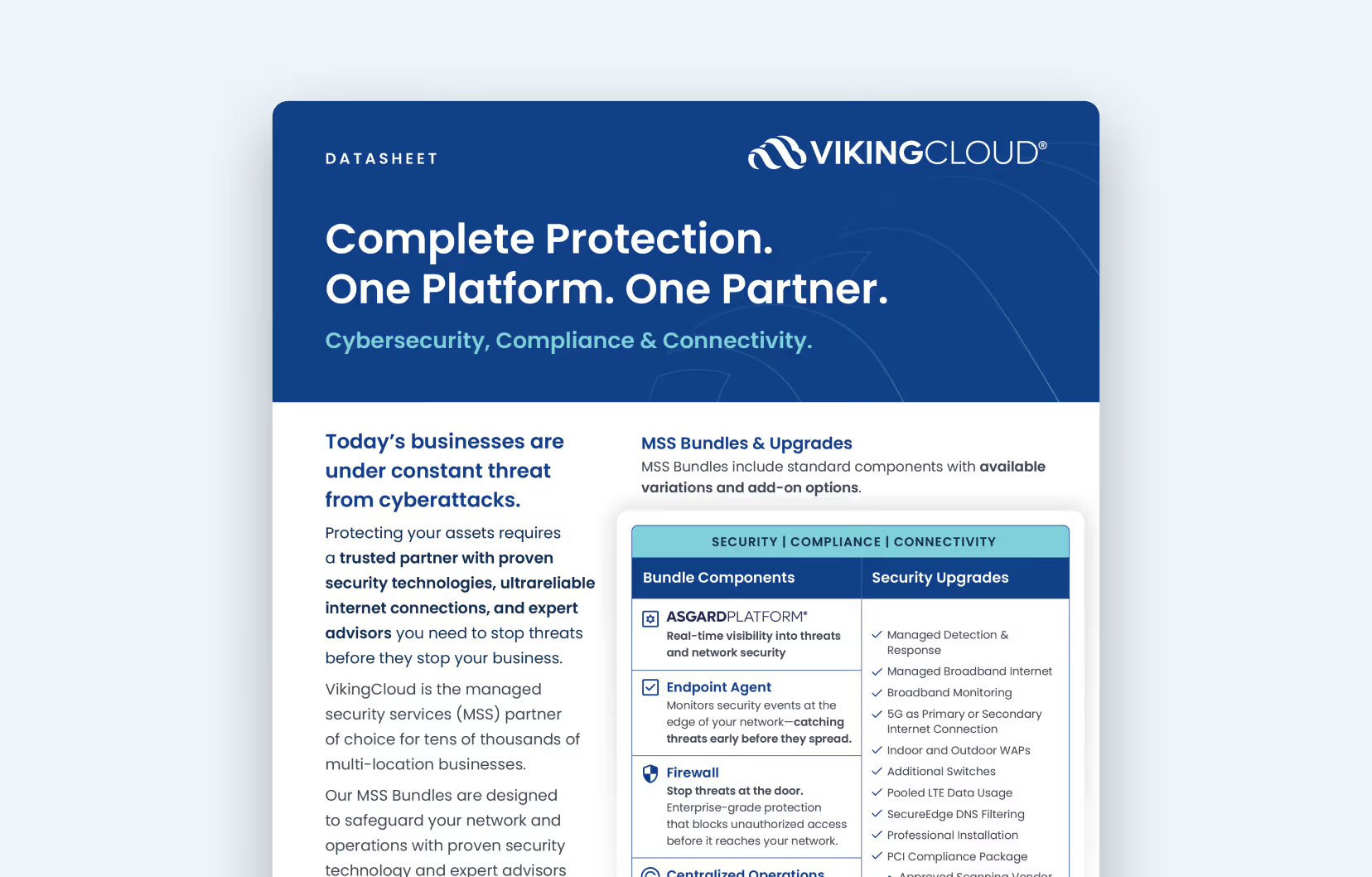
Get more details on VikingCloud’s suite of cybersecurity and compliance services.
Check out the latest news and resources from VikingCloud.
What is healthcare cybersecurity?
Healthcare cybersecurity is the practice of protecting patient data, clinical systems, connected medical devices, and the infrastructure healthcare organizations rely on to deliver care. It combines technical controls like vulnerability scanning, penetration testing, and threat detection with regulatory compliance work tied to the HIPAA Security Rule and, for organizations that handle payment data, PCI DSS.
Why is cybersecurity so important in healthcare?
Healthcare has been the most expensive industry for data breaches for 14 consecutive years, with an average breach cost of $7.42 million (IBM Cost of a Data Breach Report 2025). Beyond a financial loss, a successful attack can disrupt clinical operations, delay treatment, and put patient safety at direct risk—which is why cybersecurity in healthcare is treated as a patient safety issue, not just an IT issue.
What does the HIPAA Security Rule require?
The HIPAA Security Rule requires covered entities and business associates to implement administrative, physical, and technical safeguards to protect electronic protected health information (ePHI). Core requirements include a documented risk analysis, a risk management process, access controls, audit logging, transmission security, and incident response capabilities. Proposed updates would expand requirements around encryption, multi-factor authentication, and asset inventory.
What's the difference between a covered entity and a business associate?
A covered entity is a healthcare provider, health plan, or healthcare clearinghouse that handles protected health information directly. A business associate is any organization that creates, receives, maintains, or transmits PHI on behalf of a covered entity — including billing services, cloud hosting providers, EHR integrators, analytics platforms, and many other third-party vendors. Both are directly liable for HIPAA compliance, and both must sign a Business Associate Agreement (BAA) defining their respective responsibilities.
How often should a HIPAA risk assessment be done?
HHS OCR requires covered entities and business associates to conduct a risk analysis on a regular basis, with most healthcare cybersecurity practitioners recommending an annual cadence at minimum. A new risk assessment should also be triggered by material changes to the environment: new systems, mergers and acquisitions, significant infrastructure migrations, new business associate relationships, or following any reportable security incident.
What are the most common cybersecurity threats facing healthcare organizations?
Ransomware remains the most disruptive, frequently entering through phishing, exposed remote access, or compromised business associates. Other recurring threats include exposed ePHI across patient portals and telehealth platforms, attacks against connected medical devices, third-party and supply chain compromise, and insider threats from workforce members with broad access to clinical systems.
How can hospitals and health systems prevent ransomware attacks?
Effective ransomware prevention for hospitals, clinics, and multi-location healthcare groups combines vulnerability management, network segmentation, endpoint detection and response, managed security monitoring, immutable backups, and a tested incident response plan. Because most ransomware attacks begin with a phishing email or an exposed remote access point, ongoing workforce training and continuous external attack surface monitoring are critical complements to the technical controls.
Do business associates need their own cybersecurity program?
Yes. The HIPAA Security Rule applies directly to business associates, and a security gap in a business associate's environment can trigger breach notification obligations for every covered entity client whose data was involved. Covered entities are also increasingly requiring evidence of a mature security program—including independent risk assessments and pen testing—before signing or renewing a BAA.
Do small clinics and multi-location healthcare groups have the same cybersecurity and data privacy obligations as hospitals?
Yes. HIPAA applies regardless of organization size, and HHS OCR enforcement actions regularly involve small practices and outpatient providers. What changes is the delivery model. A 40-location urgent care chain doesn’t need a hospital-style in-house security operations center; it needs one repeatable, centrally managed program covering every site. Managed security services provide 24x7 monitoring, managed firewalls, and vulnerability scanning across all locations, while right-sized HIPAA risk assessments keep the compliance program defensible.
Get started with a VikingCloud cybersecurity and compliance assessment with our cybersecurity experts.
.png)