

With cybersecurity threats growing ever more sophisticated, many companies find that their protection and incident response coverage is too limited and inefficient. With MDR (Managed Detection and Response), however, they benefit from proactive, continuous threat management around the clock, gaining more visibility into threat vectors and boosting incident readiness.
While in-house cybersecurity and SOCs offer necessary protection, as the threat landscape evolves, business owners frequently discover they lack the resources to cope with faster attacks and increasing alert fatigue, and build coverage that doesn’t scale. MDR, therefore, is quickly becoming an appealing resolution.
In this guide, we explore what MDR is, how it works, and 10 key benefits of moving away from in-house SOCs toward a managed blend of high-end technology and professional expertise.
What MDR is and How it Works
MDR is a cybersecurity management solution that proactively guards systems, cloud environments, and infrastructure off-site. It combines leading cybersecurity expertise with adaptive, automated tools that identify and contain threats as they become more sophisticated and efficient.
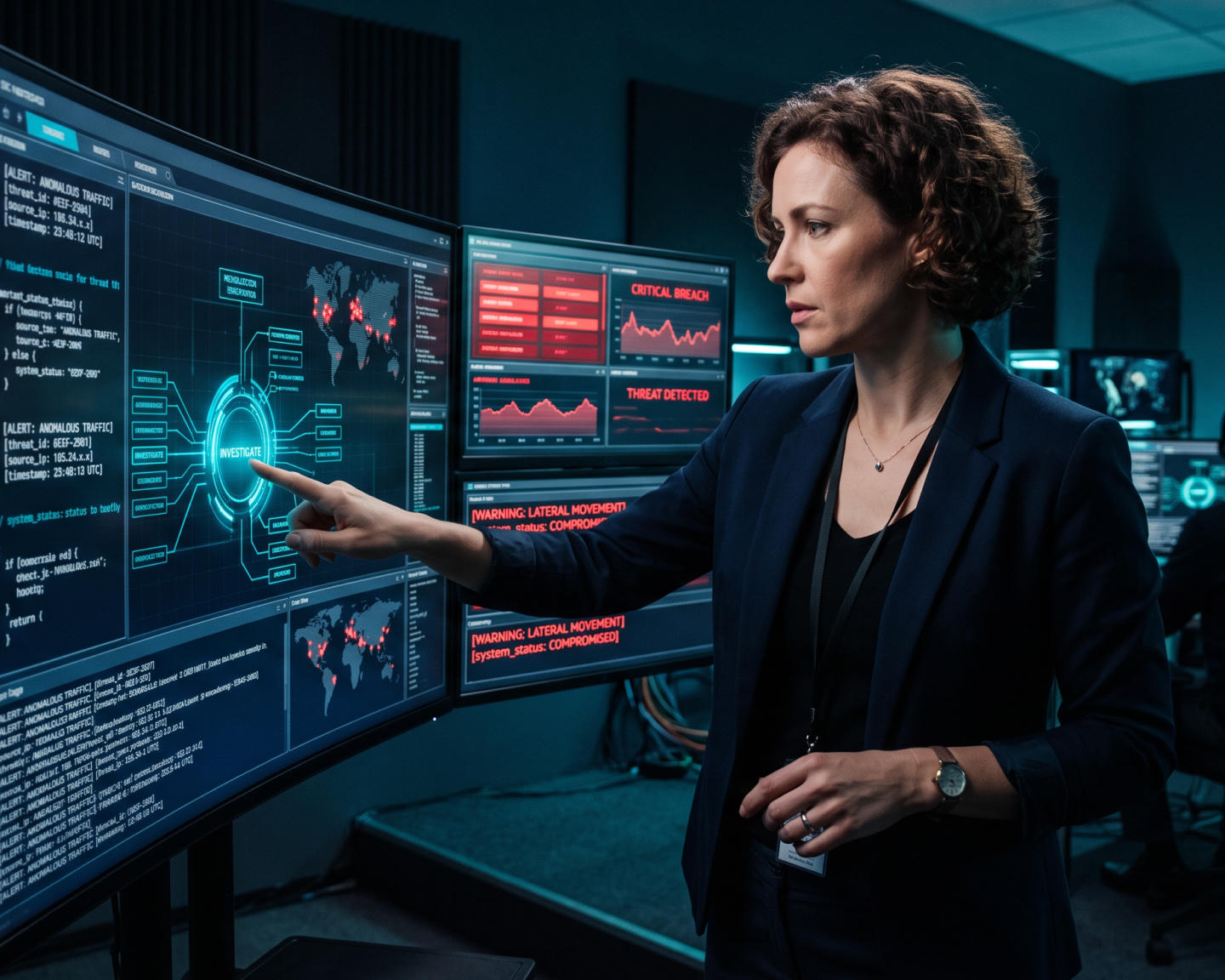
The core functions of MDR are monitoring, detecting, and hunting threats, investigating why attacks occur and what’s at risk, and supporting businesses in regaining a robust, preventive security posture. Real-time tool monitoring and analysis act as the guard dogs, while human professionals actively defend endpoints and networks with deeper analysis and contextual remediation.
It's worth noting how MDR differs from related security solutions. While endpoint detection and response (EDR) focuses narrowly on endpoint telemetry, and SIEM acts as a central log aggregation and correlation platform, MDR layers proactive threat hunting and human-led response capabilities on top of these technologies. Similarly, compared to traditional MSSPs, MDR goes beyond acting as a security alarm system by providing active investigation and containment. Some providers also incorporate network detection and response (NDR) alongside EDR and SIEM to cover network traffic and cloud workloads, giving organizations what's often called a SOC visibility triad. Others layer extended detection and response (XDR) on top to unify telemetry across these tools.
Organizations use MDR to both relieve pressure on internal SOCs and to build reassurance that their infrastructures are constantly monitored against the latest and deadliest cyber threats.
Instead of relying on machine learning and automation wholesale, MDR provides protection from the best of both worlds - smart tools that can accurately pick up on emerging threats, and seasoned cybersecurity experts who know how to handle them, and protect endpoints against future attacks. This combination of behavioral analysis, anomaly detection, and expert security analysts is what sets MDR apart from purely tool-driven approaches.
As a result, the MDR and SOC (SaaS) market is rapidly growing, meaning outsourcing to the right team - sooner rather than later - is a serious competitive advantage.
“This growth is primarily driven by the increasing frequency and sophistication of cyber threats, the rising need for compliance with data protection regulations, and the accelerated adoption of cloud-based solutions. Organizations are increasingly investing in managed detection and response services to enhance their security posture and mitigate risks associated with cyberattacks.”
Ken Research
Top 10 MDR Benefits
The key MDR benefits include 24x7 monitoring, faster detection of real threats, faster response and containment support, reduced alert fatigue, and better visibility across endpoints and assets. What’s more, users have access to stronger intelligence and experts without an SOC, improved readiness, extra compliance support, and more predictable costs and easier scaling.
Let’s explore these benefits in more detail.
1) 24x7 monitoring (coverage outside business hours)
Outsourced MDR never sleeps - it is always monitoring, analyzing, and raising threat alerts, even when the protected business has closed for the day. There is always someone available to take immediate action if threats emerge.
Firms that only have in-house SOCs may only monitor endpoints during business hours, meaning there will always be the threat of malicious activity off-the-clock. MDR removes this threat by never switching off, always ensuring peak protection. This around-the-clock coverage is backed by real-time threat detection and rapid response protocols, meaning security operations run 24x7 regardless of internal staffing.
2) Faster detection of real threats (less time attackers stay hidden)
As a result of 24x7 monitoring, MDR's combo of smart tools and expert analysis picks up on genuine threats lightning-fast. By combining proactive threat hunting with threat intelligence feeds, MDR teams can identify lateral movement, suspicious behavioral patterns, and emerging attack techniques before they escalate.
This dramatically reduces attackers’ dwell time, meaning they have less opportunity to squat or hide, and are effectively removed before they can travel deeper and cause serious damage. Reduced dwell times are one of the most measurable outcomes of MDR adoption, with organizations often seeing threats contained in minutes rather than days or weeks.
3) Faster response and containment support
Once MDR tools isolate a threat, 24x7 personnel leap into action and immediately decide on how to respond and contain it, such as by hunting down ingress points and blocking IPs. This incident response process is supported by forensics and root cause analysis, helping teams understand not just what happened, but why - and how to prevent recurrence.
Rapid threat hunting and containment dramatically reduce the potential impacts attacks have on wider networks, effectively preventing operational disruption and widespread damage. By improving MTTR (mean time to respond), MDR helps organizations minimize downtime, reduce human error in high-pressure situations, and protect core business objectives from disruption.
4) Reduced alert fatigue (human validation cuts noise)
MDR’s human expertise quickly and carefully validates all potential threats raised by tools, meaning false positives are addressed with contextual understanding, reducing the number of security alerts that reach the end user.
Alert noise is genuinely draining for security teams, with some tools frequently raising flags for investigation with zero need. MDR personnel only raise alarms when genuine threats have been detected and analyzed, reducing pressure on the end user. By offloading this burden to a third party with dedicated SOC personnel, organizations experience a meaningful reduction in their day-to-day security workload, enabling genuine business enablement rather than constant firefighting.
5) Better visibility across endpoints, apps, and critical assets
MDR provides full transparency across complex networks consisting of endpoints and all critical assets, meaning no stone is left unturned by both advanced tools and offsite experts. Through unified telemetry drawn from endpoint detection and response (EDR) technologies, network traffic, and cloud workloads, MDR delivers a comprehensive view that no single tool can offer alone.
Greater visibility means that MDR can pick up on hidden threats that SOCs might overlook, and ensure that even the smallest of concerns are identified before they can grow into major incidents.
6) Stronger intelligence because the provider “sees more.”
Alongside total network transparency, MDR allows end users to “see more” of the threat landscape and what’s at risk with continuously updated intelligence feeds. Providers aggregate threat intelligence from across their entire client base, meaning insights drawn from one organization's experience can strengthen the detection capabilities applied to another's.
This enhanced intelligence offers broad, in-depth insights into emerging threat strategies, meaning both the end user and MDR team are well-prepared to prioritize vulnerability fixes, threat-hunting maneuvers, and protective strategies.
7) Access to specialists without hiring a full SOC
Working with MDR services means organizations have instant access to years of cybersecurity expertise and competence, immediately becoming their first and second lines of defense with pro-active strategy and in-depth intelligence.
Users, therefore, can save time and money on hiring full SOCs and training in-house personnel, instead hitting the ground running with reliable, seasoned professionals and industry-leading tools from day one. In an industry facing a well-documented security talent shortage, this access to expert security analysts and cybersecurity professionals is an increasingly critical advantage.
8) Improved incident readiness (repeatable process + orchestration)
Instead of handling each new security incident ad hoc, MDR provides a standardized, efficient incident response, analysis, and remediation process that is endlessly repeatable and always improving. Many providers leverage SOAR (Security Orchestration, Automation, and Response) capabilities and automation to streamline security workflows, ensuring every incident follows a proven playbook while continuously refining detection and response accuracy.
This effectively means end users are always prepared for even the most malicious of attacks, with a defense perimeter ready to efficiently move through containment and investigation with methodical competence.
9) Compliance support through monitoring and reporting
MDR operations are based around (and can be tailored to) specific compliance frameworks, providing in-depth monitoring and security reporting to ensure end users meet regulatory requirements.
Therefore, organizations can save time, money, and worry otherwise spent on manually ensuring all security expectations are met - MDR helps them to avoid potential fines and reputational damage around the clock.
10) Predictable costs and easier scaling as the business grows
MDR operates on streamlined costs, meaning organizations typically pay set fees that can scale as business grows or needs change. This often reduces overhead costs and makes security budgeting easier to handle, with in-house security solutions typically requiring ongoing maintenance, personnel salaries, ongoing training, and tool upgrades as needs evolve. MDR's inherent scalability also means security operations can adapt to expanding networks, a growing digital footprint, and a changing risk profile without requiring organizations to overhaul their infrastructure and operations. This customization and flexibility ensures affordable protection that grows with the business rather than lagging behind it.
Challenges and Considerations in MDR Adoption
While the benefits of MDR are compelling, organizations should also be aware of potential challenges when adopting a managed solution. Integration with existing systems and existing security tools can require careful planning and an upfront investment of time, while data privacy concerns around sharing sensitive information with a third-party vendor need to be clearly addressed in any agreement.
Internal resistance and lack of awareness about what MDR offers can also slow stakeholder buy-in, making it important to communicate the value clearly across the organization. And while MDR typically reduces overall security spending, the ongoing fees involved require budgeting and a clear understanding of cost implications relative to in-house incident response capabilities.
Addressing these considerations early helps ensure a smooth transition and maximizes the long-term value of the partnership.
How to Choose the Right MDR Provider
Not all MDR providers are created equal, and selecting the right partner requires careful evaluation. Organizations should consider the provider's response capabilities, supported integrations, and whether they can customize the solution to align with specific business requirements and compliance requirements.
Key questions to ask include: What is the expected integration timeframe? How does the provider handle operational integration with your existing tools and teams? What certifications does the provider hold, and how do they ensure alignment with relevant data privacy regulations?
It's also worth evaluating the provider's technology and automation capabilities alongside their human-led response capabilities - the best MDR services balance both to deliver consistently strong outcomes. Finally, assess support quality and whether the provider offers the unified telemetry and reporting transparency your organization needs to maintain confidence in its security posture.
Conclusion
In an ever-changing threat landscape, MDR benefits far outweigh those of internal SOCs. MDR provides organizations with constant 24x7 security monitoring with instant access to expert personnel, in-depth threat hunting and analysis as issues arise, and streamlined costs and infinite scalability.
If you are considering a transition to MDR to reap these benefits, talk to our team today and discover how VikingCloud’s threat detection and response can support your specific needs.




Related Blogs
Stay up-to-date on the latest happenings in Cybersecurity and PCI Compliance.


.png)