
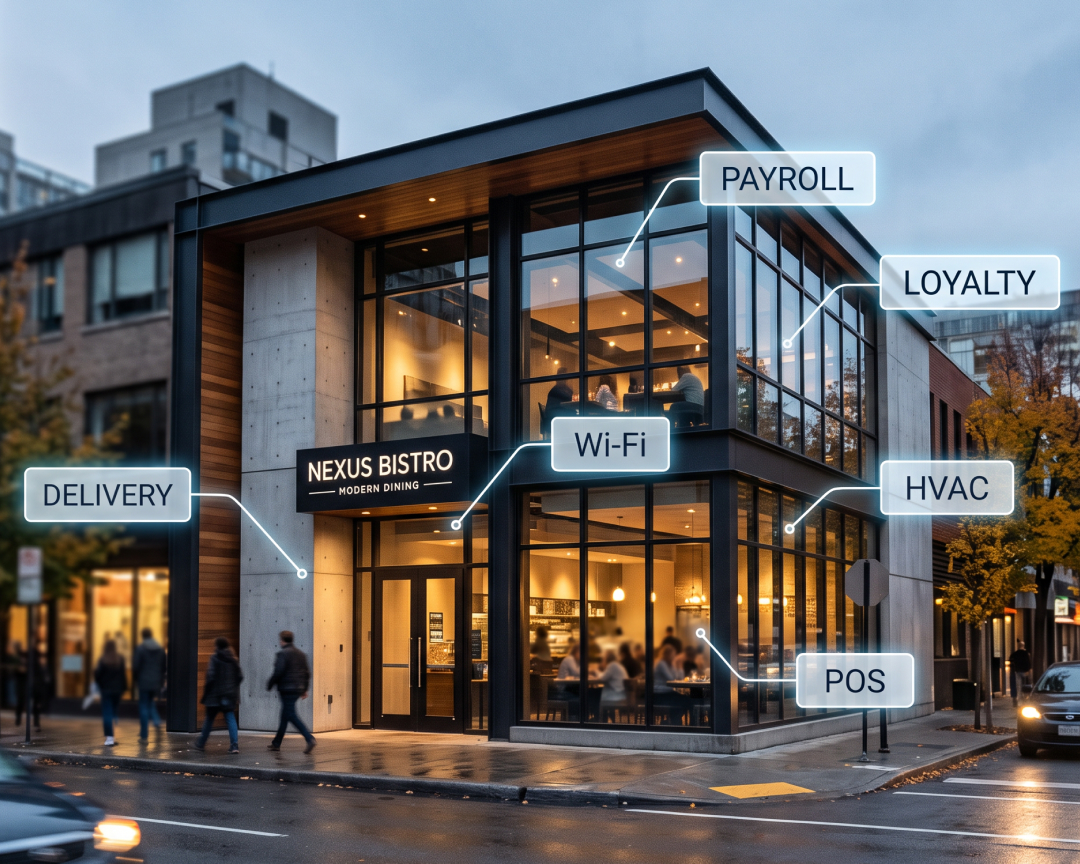
You can probably name your biggest vendors: the ones that process payments, support your point-of-sale systems, and keep your other key systems running. Far fewer can answer a bigger question: who has access to your locations, systems, and networks right now?
VikingCloud assesses vendor access across multi-location businesses such as retail, quick-service and fast-casual restaurants, hotels, fuel and convenience stores, and healthcare clinics, and the same pattern shows up every time. Vendor access builds up over time, often faster than anyone tracks it. HVAC and refrigeration techs, network and POS support teams, Wi-Fi providers, and other vendors all need some access to do their jobs. Each relationship begins with a legitimate business purpose. The challenge is that access granted for operational reasons rarely gets reviewed with the same rigor used to approve it in the first place.
For organizations operating across dozens, hundreds, or thousands of locations, this goes beyond cybersecurity. It's an operational governance challenge.
The vendor footprint is larger than you realize.
The vendors your business tracks on paper rarely match the vendors with actual access to your locations. We see this split almost every time. Your IT team handles the big tech vendors; your security team handles anything tied to sensitive systems or rules; facilities cover refrigeration and HVAC; operations bring in specialists to keep stores running; and procurement manages the contracts underneath it all. Each function sees only part of the broader picture. No single person owns the whole thing, and no single team fully understands it.
The issue isn't a lack of process. Each process simply grew on its own, and vendor relationships grew faster than the rules built to manage them.
How ungoverned vendor access develops.
Most businesses don't set out to build unmanaged vendor access. It happens over time.
Vendor visits are simple in theory: a tech shows up, does the work, and leaves. Remote support has changed that model. Systems that once needed someone on-site are now reachable from anywhere. Cloud tools make the service faster and easier to use. Monitoring has shifted from reactive to proactive.
These changes add real value, but governance often doesn't keep up. In practice, that means access stays live between visits. Shared logins outlive the staff who set them up. Remote links built years ago keep running, untouched.
We see businesses add locations, technology, and vendors faster than they build ways to answer four basic questions. Who has access? What can they reach? Who approved it? Is it still needed? Without a real check, access rarely shrinks on its own.
Why vendor access is an operational continuity issue.
Most teams treat vendor access as a security topic. For the businesses we partner with, it's just as much an operations issue. The systems vendors support are often the same systems that keep your locations running: point-of-sale systems, payment systems, networks, guest Wi-Fi, refrigeration alerts, building controls, and more. When these systems go down, the damage doesn't fall only on IT. It hits sales, customer trust, and store uptime, often all at once.
IBM's 2025 Cost of a Data Breach Report puts the average breach cost at $4.44 million worldwide. Lost business, including fewer customers and reputational damage, is one of the highest costs.
The Verizon 2025 Data Breach Investigations Report finds something even more concerning: breaches tied to third parties doubled in one year, from 15% to 30%. Almost one in three breaches Verizon studied traced back to a partner the victim didn't fully control.
You're still accountable for these outcomes, even when the vendor relationship behind the disruption never showed up in your own reporting lines. Accountability for uptime now depends on visibility into access.
Fragmented ownership creates fragmented visibility.
When we review vendor access governance, one of the hardest parts is determining ownership. Every team owns part of the vendor list, but no one administers it centrally. Each team may be doing its job well; the gaps show up between teams, not within them.
As a result, vendor relationships live on without review. Logins stay active because nothing forces a check, and remote connections keep running. After all, nothing shuts them off.
Access that no longer reflects a current business need survives because no one is responsible for asking whether it should.
What does an effective vendor access governance look like?
We advise clients to treat vendor access as a company-wide job, not just an IT task. One team needs clear authority over the full picture, not just its own slice.
Start with a full list. It should cover every vendor with live access to your stores, systems, or networks, including those brought in by facilities, purchasing, or operations. For each vendor, write down what they can access, how they access it, when access began, and who owns the relationship.
Once the list exists, ownership becomes possible. Every vendor relationship should have a named owner who ensures the access remains appropriate and aligned with current business needs. The National Institute of Standards and Technology points to governance structures that establish accountability and ongoing risk oversight as part of a mature cybersecurity program.
Set clear rules for third-party access. Grant it with a written scope. Review it on a set schedule. Revoke it as a required step when a vendor relationship ends, not as an optional cleanup later.
Shared logins need extra care. Logins tied to a single person support ownership, make shutoff easier, and improve tracking. Shared accounts persist not because anyone chooses to keep them, but because no one is ever told to check.
A regional QSR chain granted refrigeration vendor remote access to monitor walk-in coolers across 200 locations. The technician who set up the connection left the vendor's company two years ago. The login he used was never tied to him, so it remained active under a generic "service account" name. Nobody at the vendor or the chain flagged it because no one closely owned the relationship to notice.
Finally, set a plan for when access looks wrong. Knowing how to flag a concern and who can act on it keeps a small gap from becoming a big outage.
Start before an incident forces the conversation.
Vendor access governance delivers the greatest value before an incident occurs. Once an audit finding is identified, a breach investigation begins, or leadership wants answers after an operational disruption, you're assessing your environment under pressure.
The better approach is proactive. When working with our clients, we suggest three steps:
- Identify which team has the clearest view of vendor access relationships today.
- Build a list that goes beyond IT-managed vendors. Field and facilities vendors enter through purchasing or store management, not IT, which makes them the group least likely to have passed a security check.
- Name one owner who is responsible for keeping that list current.
If a full review isn't feasible right away, prioritize vendors with access to payment systems, customer data environments, or critical infrastructure that supports location operations.
Two things to skip. Don't write a vendor access rulebook before you finish the list. A rulebook built without a true picture of your setup describes a goal, not your real state. And don't treat this as a one-time job. The first list sets a baseline, and the real payoff comes from the ongoing checks that follow it.
An absence of known incidents doesn't mean your governance works. Unmanaged access often stays hidden until something exposes it.
How well do you understand your third-party access environment?
Naming your biggest vendors is the easy part. Which of them have access to your stores today, what they can reach, who approved it, and whether it's still needed is far harder to answer with confidence. For multi-location enterprises, those unanswered questions represent more than a security concern. They create operational blind spots that can affect uptime, customer experience, compliance efforts, and business continuity.
VikingCloud helps multi-location organizations assess their third-party access environments, identify governance gaps, and establish consistent processes to manage vendor access across all locations. The goal is not to eliminate vendor relationships. It's to make sure the access supporting your business reflects deliberate decisions rather than years of accumulated assumptions.
Learn how VikingCloud can help your organization build a vendor access governance program that supports both operational continuity and long-term resilience.



Related Blogs
Stay up-to-date on the latest happenings in Cybersecurity and PCI Compliance.



.png)